
How Macronutrients Influence Body Composition

Educational Article | February 2026

Introduction to Macronutrients

Macronutrients—proteins, carbohydrates, and fats—are the three major categories of nutrients required by the body in substantial quantities. Each macronutrient serves distinct physiological functions and influences body composition through different mechanisms.

While all macronutrients provide energy (measured in kilocalories), they differ in their specific roles in building and maintaining body tissues, supporting metabolic processes, and influencing hormonal responses. Understanding these differences provides insight into how dietary composition affects physiological function and tissue composition.

Protein and Muscle Tissue

Proteins are polymers of amino acids that serve as the primary structural component of muscle tissue. Additionally, proteins function as enzymes, hormones, immune components, and transport molecules throughout the body.

Protein synthesis (building muscle tissue) requires adequate protein intake providing all nine essential amino acids. Different protein sources vary in their amino acid profiles, with animal-based proteins typically containing complete amino acid profiles and plant-based proteins often requiring combinations to achieve completeness.

Protein intake requirements increase with physical activity, particularly resistance training that stimulates muscle protein synthesis. British Dietetic Association guidance recommends adequate protein distribution throughout the day to support muscle maintenance and repair processes.
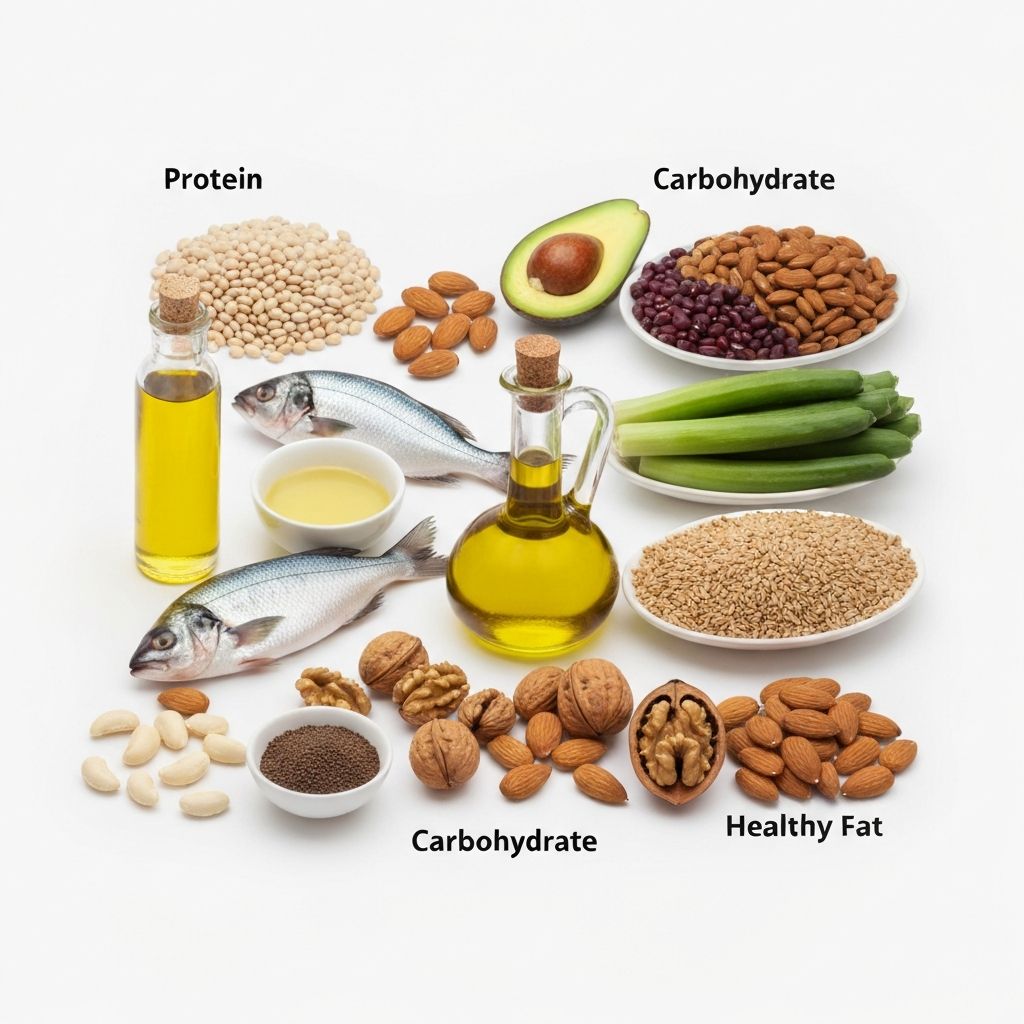
Different protein and nutrient sources

Carbohydrates and Energy Metabolism

Carbohydrates are polymers of glucose that serve as the primary substrate for rapid energy production in muscles and the brain. The body stores carbohydrates as glycogen in muscle and liver tissues, which can be mobilized during activity or between meals.

Carbohydrate quality varies based on processing and glycemic index. Complex carbohydrates (whole grains, legumes, vegetables) provide sustained energy release, micronutrients, and dietary fiber. Simple sugars provide rapid energy but often lack micronutrient density.

During resistance exercise, carbohydrates support muscle contraction and maintain glycogen stores needed for recovery. The relationship between carbohydrate intake and body composition depends on total energy balance and activity patterns rather than carbohydrate exclusion.

Fats and Physiological Function

Dietary fats are essential for multiple physiological functions beyond energy provision. Fats support hormone production, facilitate absorption of fat-soluble vitamins (A, D, E, K), maintain cell membrane integrity, and provide important fatty acids that the body cannot synthesize.

Different fat types have varying metabolic effects. Saturated fats, unsaturated fats, and polyunsaturated fatty acids (including omega-3 and omega-6) each play distinct roles in physiological function. Current evidence from UK health authorities indicates that fat distribution rather than total fat quantity is most relevant for health outcomes.

Fat is energy-dense (9 kcal per gram compared to 4 kcal per gram for protein and carbohydrates), so moderate portion control is relevant when energy balance is a consideration. However, adequate fat intake is necessary for numerous essential physiological processes.

Macronutrient Distribution and Body Composition

The distribution of macronutrients in a diet influences how the body utilizes energy and supports tissue synthesis:

  • Protein and Muscle Maintenance: Adequate protein intake supports muscle protein synthesis and recovery, particularly during resistance training
  • Thermic Effect: Different macronutrients require different amounts of energy for digestion and absorption, with protein having the greatest thermic effect
  • Satiety: Protein and fiber promote satiety through different mechanisms, potentially supporting sustained energy balance
  • Metabolic Adaptation: Macronutrient composition influences hormonal responses that affect metabolic rate and energy utilization
  • Individual Variation: Individual responses to different macronutrient distributions vary based on genetics, activity level, and metabolic factors

Micronutrients Within Food

Whole foods containing macronutrients also contain micronutrients (vitamins and minerals) essential for metabolic processes. The micronutrient density of food sources influences how well they support physiological function.

Vegetables, fruits, whole grains, legumes, nuts, seeds, and quality protein sources all provide both macronutrients and important micronutrients. A diet emphasizing variety across these categories typically supports diverse micronutrient intake necessary for optimal metabolic function.

Practical Implications

Understanding macronutrient roles provides a foundation for recognizing balanced nutrition:

  • Adequate protein intake supports muscle maintenance, particularly with resistance training
  • Diverse carbohydrate sources provide both energy and micronutrients
  • Adequate fat intake is essential for hormone production and nutrient absorption
  • Total energy balance, not individual macronutrient elimination, is central to weight management
  • Individual macronutrient distribution varies based on activity level, preferences, and cultural context
  • Whole food sources provide macronutrients along with essential micronutrients and phytonutrients

Disclaimer: This article provides educational information about macronutrient physiology. Individual requirements vary based on activity level, age, health status, and other factors. For personalized nutritional guidance, consult qualified healthcare professionals or registered dietitians. See our full health disclaimer.

Related Reading

Explore other educational articles:

Lifestyle Components in Physiological Balance

Read Article